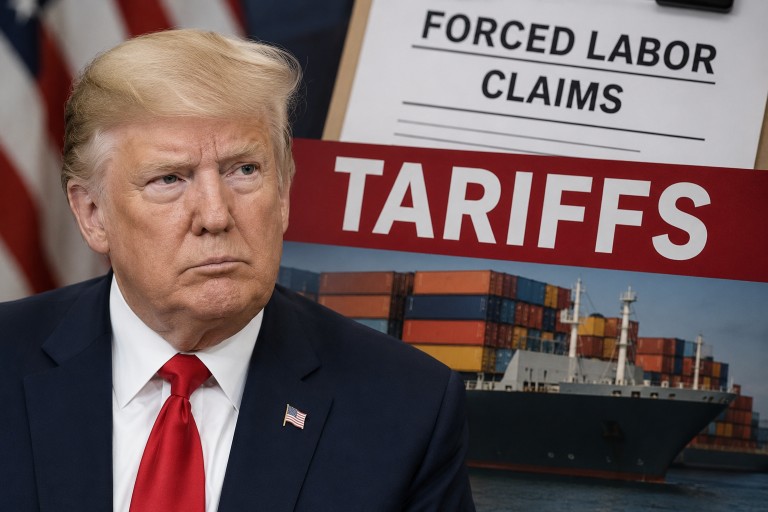
President Donald Trump’s decision to impose new tariffs on imports from over 80 countries has sparked a wave of criticism. The administration is being accused of leveraging concerns about forced labor to justify its broader trade agenda. The tariffs, which range between 10% and 12.5%, affect imports from major partners like the UK, EU member states, Canada, Mexico, Australia, India, and China. Invoking Section 301 of the Trade Act of 1974, these measures allow the US to act against nations engaged in unfair trade practices, including the use of forced labor.
According to US Trade Representative Jamieson Greer, many nations have not done enough to prevent goods produced through forced labor from entering the global market. Greer emphasized the US’s expectations for its partners to enhance enforcement against such practices. However, this explanation has met with strong opposition from Democratic lawmakers. Representative Richard Neal acknowledged the global importance of addressing forced labor but criticized its use as a justification for broad tariffs. Meanwhile, Representative Linda Sánchez questioned the rationale behind subjecting countries with robust labor protections to similar tariff levels as those with poor labor practices.
The new tariffs follow a series of Trump-era trade measures that faced legal scrutiny, with courts previously ruling that some actions exceeded presidential authority. The current administration has employed a different legal basis for these tariffs, yet legal experts anticipate further challenges. Critics are also sounding the alarm over potential price hikes for American consumers. Senate Democratic leader Chuck Schumer warned that the tariffs could exacerbate financial burdens on households already grappling with inflation. Representative Brendan Boyle added that these tariffs could effectively act as an additional tax on consumers.
Public opinion surveys reveal a prevalent belief among Americans that tariffs have contributed to rising prices, although the Trump administration maintains that its trade policies are designed to protect US industries, manufacturing, and workers. Within the Republican ranks, the response has been mixed. Some lawmakers view the tariffs as a necessary response to unfair trade practices, while others worry about the repercussions of higher import costs, which could lead to increased consumer prices.