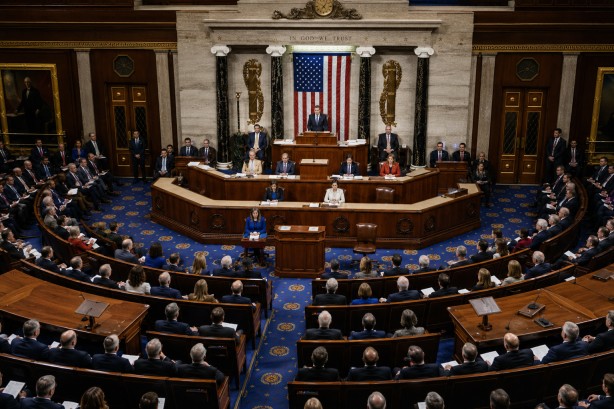
In a closely contested decision, the U.S. House of Representatives has advanced a $1.15 trillion National Defense Authorization Act (NDAA), primarily along party lines, amid contentious debates over military policy and domestic issues. Approved with a 216-212 vote, the defense spending package now awaits Senate consideration. The legislation earmarks pay raises between 5% and 7% for military personnel and allocates funds to bolster the nation’s defense infrastructure.
Republican lawmakers championed the bill, asserting its necessity for modernizing the military and improving national defense readiness. In contrast, Democrats criticized the measure, arguing that the financial commitment to defense is disproportionate, especially as other domestic programs face potential cuts. The political landscape was further strained by President Donald Trump’s military actions in Iran, executed without prior congressional approval, which raised alarms about increased U.S. military engagement in the Middle East.
The defense bill also became a flashpoint for debate over voting legislation, as Democrats opposed the inclusion of stricter voter identification rules and limitations on mail-in voting—provisions supported by Trump. They argued that such electoral measures are unrelated to the primary focus of defense legislation and should be addressed separately.
During the legislative process, the House turned down a proposal to cease U.S. military aid to Ukraine, while other contentious amendments concerning transgender military service and defense healthcare sparked significant discussion. These debates highlighted the broader political disagreements influencing the bill’s passage.
Additionally, House Republicans approved a separate budget outline authorizing $73 billion for military operations involving Iran, a figure that falls short of the Pentagon’s more extensive defense funding request. This budget decision reflects ongoing deliberations over the scope and funding of U.S. military activities abroad.