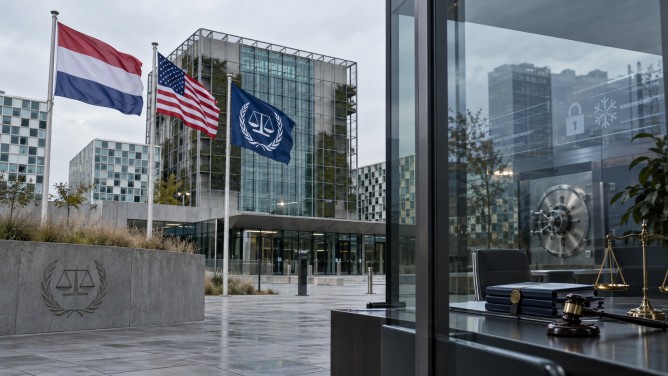
The International Criminal Court (ICC) is facing potential new sanctions from the United States, which could impact its operations significantly. This development comes amid a broader conflict between Washington and the court, as the U.S. has already imposed sanctions on several ICC officials. The issue stems from American objections to ICC investigations that involve U.S. and Israeli personnel, which Washington claims overstep the tribunal’s jurisdiction.
In anticipation of further sanctions, the Netherlands, which hosts the ICC in The Hague, is exploring ways to support the court’s essential functions. Dutch officials are considering measures to ensure that the ICC can continue paying its staff, safeguarding witnesses, and maintaining its detention facilities if U.S. restrictions affect the court’s access to financial services and other operational necessities.
The new sanctions could extend beyond individuals to target the ICC as an institution, potentially hindering its ability to engage with U.S. companies and services. Such measures might disrupt the court’s banking, insurance, and technology operations. To mitigate risks, the ICC has been proactively moving some of its services away from U.S.-based providers and reviewing its financial and technological arrangements.
Established in 2002, the ICC is tasked with investigating and prosecuting crimes such as genocide, crimes against humanity, war crimes, and aggression, particularly when national legal systems fail to address these issues. As the host country, the Netherlands has previously explored strategies to minimize the impact of sanctions on the court, highlighting the ongoing tension between international judicial processes and national interests.