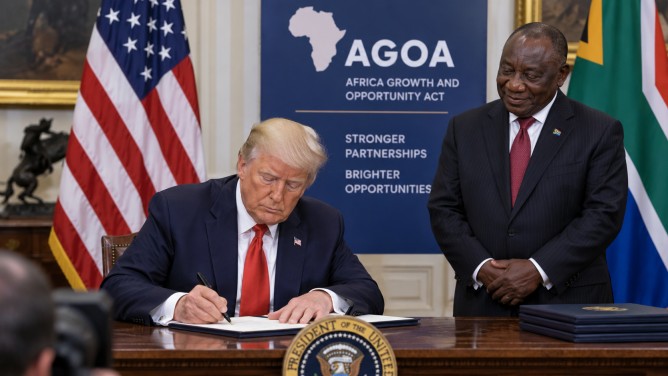
South Africa has successfully sidestepped an immediate risk to its favorable trade status with the United States following President Donald Trump’s decision to sign legislation that extends the African Growth and Opportunity Act (AGOA) until December 31, 2028. This development delivers a sense of security to exporters throughout sub-Saharan Africa, who faced months of uncertainty surrounding the trade program’s future. Notably, the legislation moved through Congress without undergoing any significant policy changes.
Particular concerns had been raised about South Africa’s continued eligibility for AGOA benefits. Discussions among U.S. officials and lawmakers had previously ventured into the possibility of subjecting Pretoria to different criteria or entirely excluding it from the program, which sparked apprehension regarding potential increased trade barriers for South African exporters. AGOA, which was established in 2000, aims to enhance economic development and investment by offering eligible African nations preferential access to the U.S. market, primarily through duty-free treatment for qualifying goods.
The newly enacted two-year extension grants African exporters a period of consistency, averting immediate alterations to the existing trade framework. For South Africa, this extension eliminates the short-term threat of losing the advantages provided by AGOA. Nonetheless, the extension does not necessarily conclude the ongoing dialogue about the future dynamics of U.S.-Africa trade relations. The Trump administration retains the possibility of considering broader changes to the program or adjusting its approach to individual countries before the new expiration date.
For now, businesses in South Africa, along with other eligible African exporters, have been afforded additional time to strategize and organize their trade activities with the U.S., as AGOA’s provisions remain effective through the end of 2028. This period of stability is crucial for exporters as they plan their future engagements in the U.S. market. However, the conversation around the long-term trajectory of AGOA and its impact on U.S.-Africa trade ties is likely to persist, even with the current extension in place.