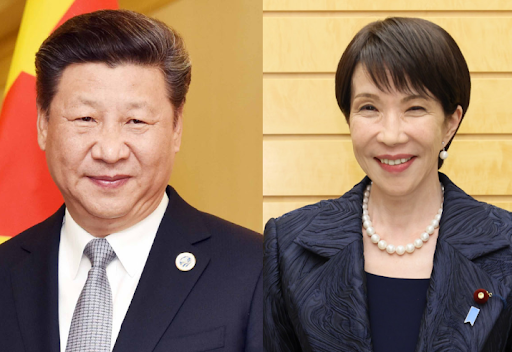
The geopolitical landscape of East Asia has grown increasingly volatile as China deploys economic countermeasures against Japan following Prime Minister Sanae Takaichi’s remarks about Taiwan defense scenarios. Beijing’s embassy in Tokyo has released its second travel warning for Chinese citizens in recent weeks, citing alleged safety concerns for Chinese nationals visiting Japan. This advisory represents a deliberate strategy to inflict economic pain on Japan’s tourism-dependent economy in response to Tokyo’s perceived provocation regarding Taiwan.
The projected economic fallout is substantial and alarming for Japanese policymakers. Economist Takahide Kiuchi forecasts potential losses approaching 1.8 trillion yen ($11.5 billion), with corresponding reductions in Japan’s annual economic growth by approximately 0.3 percentage points. Chinese tourism to Japan had been experiencing remarkable growth, with over 8 million visitors recorded between January and October, constituting nearly one-quarter of all international tourist arrivals according to the Japan National Tourism Organization, positioning China to become Japan’s top tourism market once again.
The human cost of diplomatic tensions is becoming visible in Japan’s tourism communities. Rie Takeda, proprietor of a traditional tea ceremony venue in Tokyo’s culturally significant Asakusa neighborhood, has experienced 200 reservation cancellations stretching into January. Her establishment normally welcomes around 3,000 Chinese visitors annually for authentic cultural experiences, and while she maintains hope for business recovery coinciding with Chinese New Year festivities in February, historical precedents suggest diplomatic tourism boycotts often persist for extended periods.
Beyond tourism, the diplomatic freeze is creating widespread disruptions in cultural and commercial relationships between the two nations. Chinese distributors have indefinitely postponed theatrical releases of two Japanese films, while performance venues in Shanghai cancelled appearances by Japanese comedy groups. Japanese manufacturing sectors face potential vulnerability to restrictions on rare earth mineral exports from China, materials essential for automotive and electronics production. The ongoing two-year Chinese embargo on Japanese seafood imports remains firmly in place with no resolution in sight.
The fundamental disagreement hinges on interpretations of the “One China” doctrine and the foundational 1972 agreement establishing formal diplomatic ties. China demands explicit Japanese recognition of Chinese sovereignty over Taiwan, while Japan’s original diplomatic language expressed that it “fully understands and respects” China’s position that Taiwan is an “inalienable part” of Chinese territory, deliberately avoiding direct affirmation. Takaichi has subsequently attempted to defuse tensions, characterizing her statements as honest responses to hypothetical scenarios rather than policy announcements, while reiterating Japan’s commitment to maintaining productive, mutually beneficial relations with Beijing.