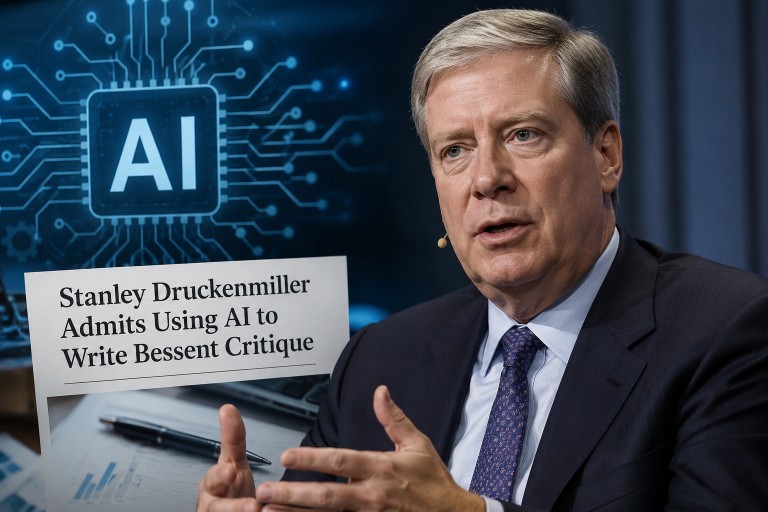
Renowned billionaire investor Stanley Druckenmiller has made headlines by admitting he utilized artificial intelligence to assist in crafting an opinion piece that critiques US Treasury Secretary Scott Bessent’s strategy in handling the bond market. This revelation has sparked discussions about the role of AI in journalism, particularly in the realm of opinion writing.
Druckenmiller clarified that while AI was employed as a tool in the writing process, the core ideas and arguments presented in the article were entirely his own. He expressed pride in integrating technology into his process, emphasizing that the AI was merely a facilitator in articulating his thoughts.
The publication that featured Druckenmiller’s article stood by the piece, asserting that the primary concern was whether the investor’s original perspectives and arguments were accurately conveyed. This stance highlights the ongoing conversation around the appropriate use of AI in editorial contexts, focusing on issues of authorship and transparency.
The disclosure by Druckenmiller has intensified the broader debate about artificial intelligence’s role in journalism. Questions have arisen regarding how AI might impact editorial standards and the authenticity of opinion pieces, underscoring a need for clear guidelines and standards as technology continues to evolve.