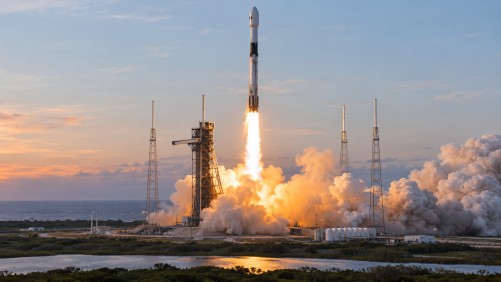
The US Federal Communications Commission (FCC) has given the green light to SpaceX’s ambitious plan to create space-based data centres, potentially transforming the landscape of artificial intelligence (AI) computing infrastructure. The project, termed Starmind, involves deploying up to one million satellites to function as data processing units in orbit, a move that could bolster America’s burgeoning AI industry.
SpaceX intends to utilize solar energy to power these orbital data centres, aiming to alleviate the strain that traditional ground-based data centres place on electricity, water resources, and land. The FCC’s approval sets a timeline for SpaceX, mandating the initial deployment of satellites by November 2033, with a requirement to launch at least 100,000 units by November 2035, and achieving 50% of the intended constellation by November 2038.
However, the initiative faces several technical and economic hurdles. Key challenges include the management of excess heat from computing equipment in space, the substantial costs associated with deploying such a large number of satellites, and the risk of increased collisions as the density of objects in orbit rises. These issues highlight the complexities involved in realizing space-based data processing.
Central to the success of the Starmind project is SpaceX’s next-generation Starship rocket, which is expected to play a crucial role in reducing launch costs and facilitating the large-scale deployment of satellites. This technological advancement is pivotal, as the feasibility of the project hinges on economic viability and the ability to efficiently operate data centres in orbit.
The FCC’s approval marks a significant step forward for space-based computing, potentially opening new avenues for AI development. However, the full implementation of this visionary project will depend on ongoing technological innovations, the evolution of launch capabilities, and an assessment of the economic practicality of sustaining such an ambitious infrastructure in space.